If you're running a retail or B2B business on Shopify, you've probably hit this wall: your online store operates in one world, while your ERP: where all your real business data lives: operates in another. Orders come in, and someone manually keys them into your ERP. Stock levels change, and someone updates Shopify. Prices shift, and the spreadsheet dance begins.
This isn't inefficiency. This is operational friction that compounds with every new order, every new product, every new customer. And when your business scales? That friction becomes a bottleneck that chokes growth.
Shopify-ERP integration eliminates that friction entirely. When we architect integration between your Shopify store and your ERP system: whether that's Sage, OMNI Accounts, Xero, or another platform: we're not just connecting two systems. We're building a unified operational ecosystem where data flows automatically, instantly, and accurately across every business function.
At QKON Bytes, we partner with Stock2Shop to engineer these integrations. Stock2Shop serves as the synchronization engine that enables real-time communication between your ERP and your Shopify store. What that means in practice: your business operates as one cohesive unit instead of disconnected platforms held together with manual effort.
Here's why that integration transforms everything.

Real-Time Stock and Pricing Sync: The Foundation of Credibility
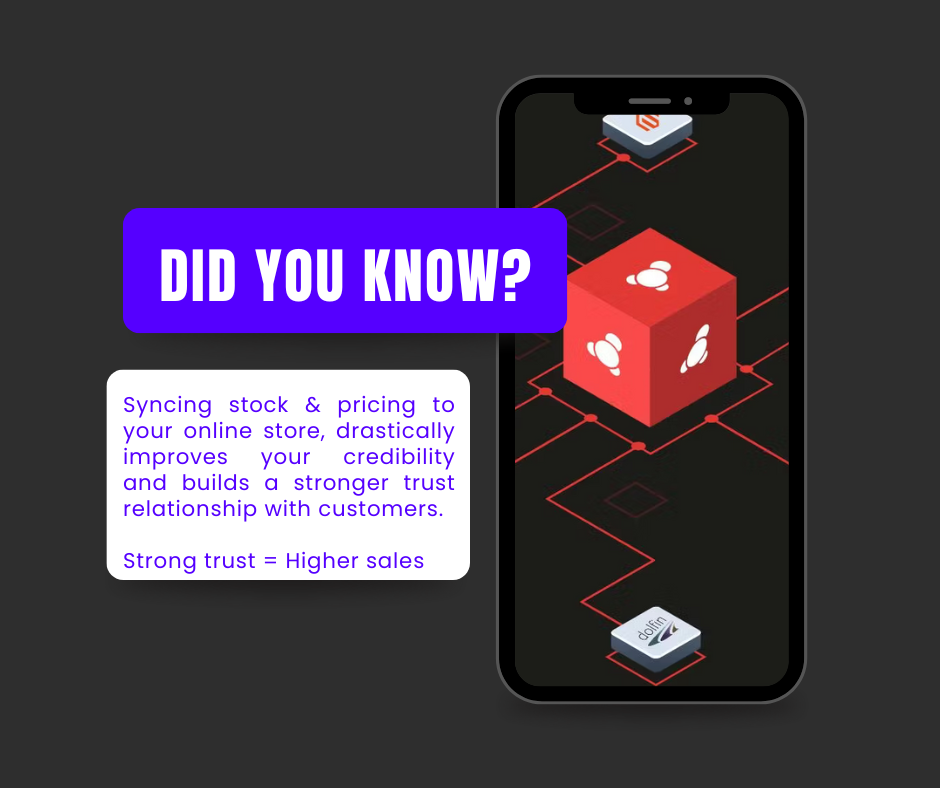
When a customer lands on your Shopify store, they're making decisions based on two critical data points: what's in stock and what it costs. If either of those is wrong, you've lost trust. And in e-commerce, trust isn't just important: it's the entire foundation of the sale.
Without integration, your stock levels on Shopify are only as accurate as your last manual update. Sell a product in-store or through another channel? Unless someone remembers to update Shopify, you're advertising inventory you don't have. Price changes in your ERP? They don't appear online until someone manually adjusts them. That lag creates overselling, customer disappointment, and operational chaos in fulfillment.
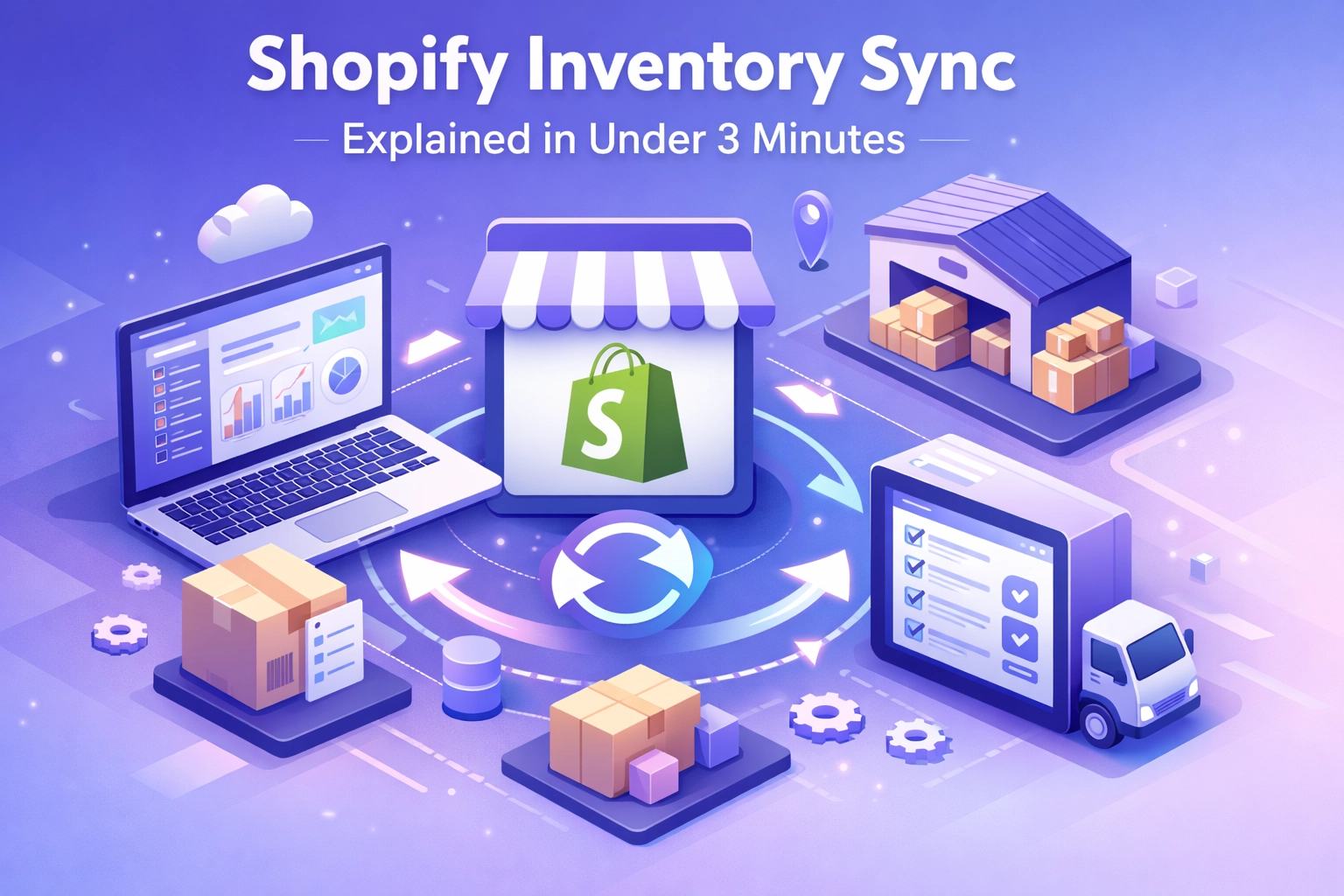
Stock2Shop solves this by maintaining continuous synchronization between your ERP and Shopify. When stock levels change in your ERP: whether from a sale, a return, or a warehouse adjustment: that change reflects on your Shopify store instantly. Same with pricing. Update a product cost in your ERP, and your online store reflects that new price in real time across all variants and customer groups.
This synchronization operates both ways. When someone purchases on Shopify, inventory decrements immediately in your ERP. Your warehouse team sees accurate stock levels. Your purchasing team knows what needs reordering. Your finance team has real-time sales data. Everything stays aligned without anyone touching a spreadsheet.
The result isn't just operational accuracy: it's customer confidence. When shoppers see accurate stock levels and current pricing, they trust your store. That trust translates directly into conversion rates and repeat business.
Order Sync: Eliminating the Data Entry Bottleneck
Here's what manual order processing looks like in most businesses: an order comes through Shopify, someone prints it or pulls it up on screen, then manually enters every line item into the ERP. Customer details, product SKUs, quantities, shipping information: all keyed in by hand. Multiply that by dozens or hundreds of daily orders, and you've got a full-time job that produces zero strategic value.
Worse, manual data entry introduces errors. Wrong SKU, incorrect quantity, mistyped customer address: each mistake creates fulfillment delays, returns, and customer service issues that compound the time cost.
Integrated order sync removes humans from this process entirely. The moment a customer completes checkout on Shopify, Stock2Shop captures that order data and pushes it directly into your ERP. Customer information, line items, pricing, payment status, shipping method: everything transfers automatically with zero manual intervention.
Your fulfillment team sees new orders appear in your ERP instantly. They pick, pack, and ship based on accurate data that came straight from the source. No transcription, no verification, no double-checking against the Shopify dashboard. The order exists in your operational system immediately, ready for action.
This automation accelerates your entire fulfillment cycle. Orders that previously took hours to process now move to fulfillment in minutes. Faster fulfillment means faster shipping. Faster shipping means happier customers and fewer "where's my order" inquiries clogging your support channels.
For B2B operations with complex order structures: multiple line items, custom pricing, dealer-specific terms: this integration becomes even more critical. Stock2Shop handles the complexity automatically, ensuring every order detail transfers accurately regardless of how intricate the transaction.
Automated Product Creation: Your ERP as the Single Source of Truth
Adding new products to your online store shouldn't require duplicate effort. But without integration, that's exactly what happens: you create the product in your ERP with all its specifications, pricing, and inventory details, then manually recreate it in Shopify with descriptions, images, variants, and collections.
This duplication isn't just inefficient: it creates data inconsistency. Product details drift between systems. Pricing doesn't match. SKUs get entered differently. Your team spends time reconciling systems instead of selling.
Stock2Shop enables your ERP to function as the master product database. When you create a new product in your ERP: complete with SKU, description, pricing, cost data, and initial stock levels: Stock2Shop automatically creates that product in Shopify. Product attributes, variants, pricing tiers, and inventory quantities all transfer without manual recreation.
This automation extends to product updates. Change a product description in your ERP? It updates in Shopify. Adjust pricing for a customer segment? Those prices sync automatically. Discontinue a product? It deactivates online without separate action.
The strategic advantage here: your product team works in one system. They don't context-switch between ERP and e-commerce platforms. They don't duplicate data entry. They maintain products where your business logic lives, and that data propagates everywhere it needs to go.
For businesses with large catalogs: thousands of SKUs, multiple variants, complex attribute structures: this automation transforms product management from an overwhelming administrative burden into a streamlined operational process.
Manual Work Hours Saved: Efficiency That Compounds
Calculate the time your team currently spends on these tasks:
- Manually updating stock levels in Shopify
- Entering orders from Shopify into your ERP
- Updating product pricing across platforms
- Creating new products in multiple systems
- Reconciling data between Shopify and your ERP
- Fixing errors caused by manual data entry
- Responding to customer inquiries about stock availability or order status
For most businesses, that's easily 10-20 hours per week. For high-volume operations, it can be several full-time equivalents.
Integration reclaims all of those hours. Your team stops being data transfer agents and starts focusing on activities that actually grow the business: customer relationships, strategic planning, marketing, product development.
The efficiency gain isn't just about raw time savings. It's about eliminating context switching, reducing mental load, and removing the constant background stress of keeping systems aligned. Your operations team stops firefighting data inconsistencies and starts optimizing processes.
This efficiency compounds as your business grows. Without integration, adding sales volume means adding headcount to handle the data processing. With integration, adding sales volume just means more automated data flow. Your operational costs scale sub-linearly with revenue: the foundation of profitable growth.

Scalability with Stock2Shop: Built for Growth
Here's the real test of any business system: what happens when volume doubles? What about when you add a second warehouse? A third sales channel? International markets with different currencies and tax structures?
Most businesses hit a scaling wall where their operational infrastructure can't handle increased complexity without proportional increases in overhead. More orders mean more staff to process them. More SKUs mean more time managing product data. More channels mean exponentially more reconciliation work.
Stock2Shop architectures integrations that scale without adding operational burden. The system handles high transaction volumes: thousands of orders per day, tens of thousands of SKU updates, real-time inventory adjustments across multiple warehouses: without performance degradation.
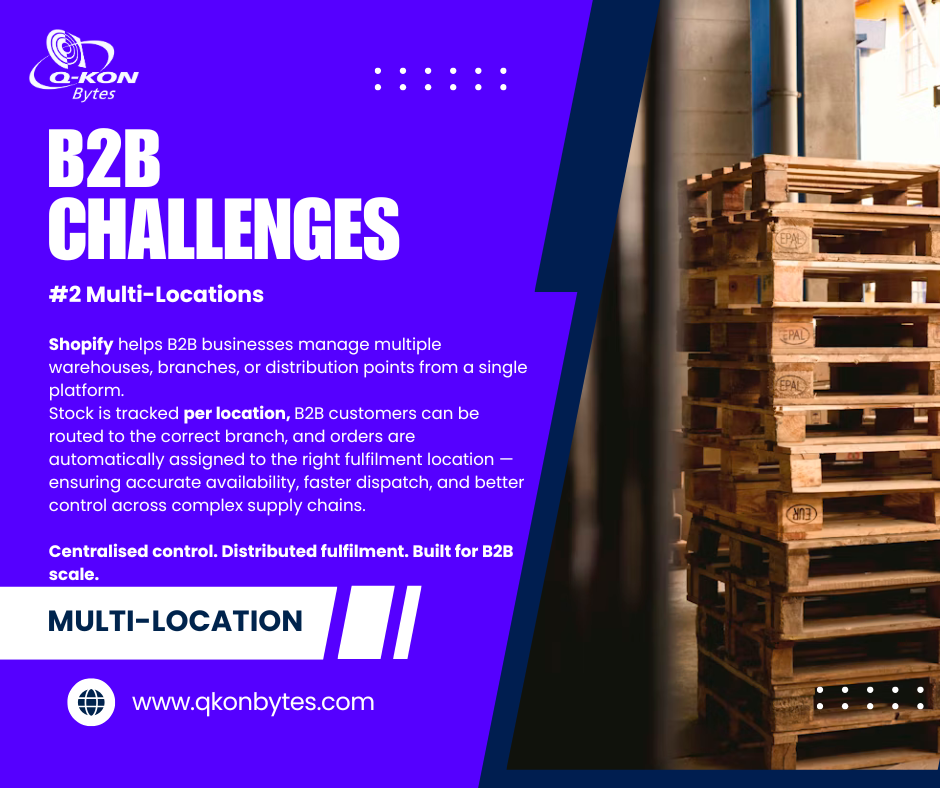
When you add a new warehouse location, Stock2Shop manages inventory across all locations and routes orders to the optimal fulfillment center. When you add a new sales channel alongside Shopify, the same integration architecture extends to synchronize data across all channels. When you expand internationally, Stock2Shop handles multi-currency pricing and region-specific tax calculations automatically.
This scalability operates at the data architecture level. Stock2Shop doesn't just move data faster: it structures data flow to handle complexity that would overwhelm manual processes or basic point-to-point integrations. Multi-location inventory, customer-specific pricing, complex product variants, tiered shipping rules: all managed within the integration layer.
The result: your business can pursue growth opportunities without first asking "can our systems handle this?" The technical infrastructure supports expansion instead of constraining it.
What This Represents
Shopify-ERP integration isn't a technical upgrade: it's an operational transformation. When we architect these integrations at QKON Bytes, we're not connecting software. We're eliminating the structural inefficiencies that prevent businesses from scaling profitably.
The businesses that thrive in modern retail and B2B markets are those that treat their technical infrastructure as strategic advantage, not administrative overhead. Integration creates the operational foundation that enables everything else: better customer experiences, faster growth, more efficient teams, data-driven decision making.
If your team is still manually bridging the gap between Shopify and your ERP, you're not just wasting time: you're capping your growth potential. The question isn't whether to integrate. The question is how much longer you'll operate without it.
We engineer these integrations through our partnership with Stock2Shop because the architecture works. Data flows accurately, automatically, and at scale. Your business operates as one unified system. And you reclaim the operational capacity to focus on what actually matters: serving customers and growing revenue.
That's not just more efficient. That's a fundamentally different way to operate.
Ready to eliminate operational friction and build scalable infrastructure? Get in touch and let's architect your integration.
Tagged with :