Shopify is the platform many growing brands build on when they’re ready to sell online without turning commerce into an engineering project. It’s a leading e-commerce platform used by businesses of all sizes—solo founders, fast-growing D2C brands, and multi-channel retailers—because it combines speed-to-market with a serious commerce foundation.
At QKON Bytes, we’re Shopify Experts. We don’t just launch stores—we engineer Shopify ecosystems that convert, scale, and stay maintainable as your product catalog, team, and operational complexity grow.
What is Shopify?
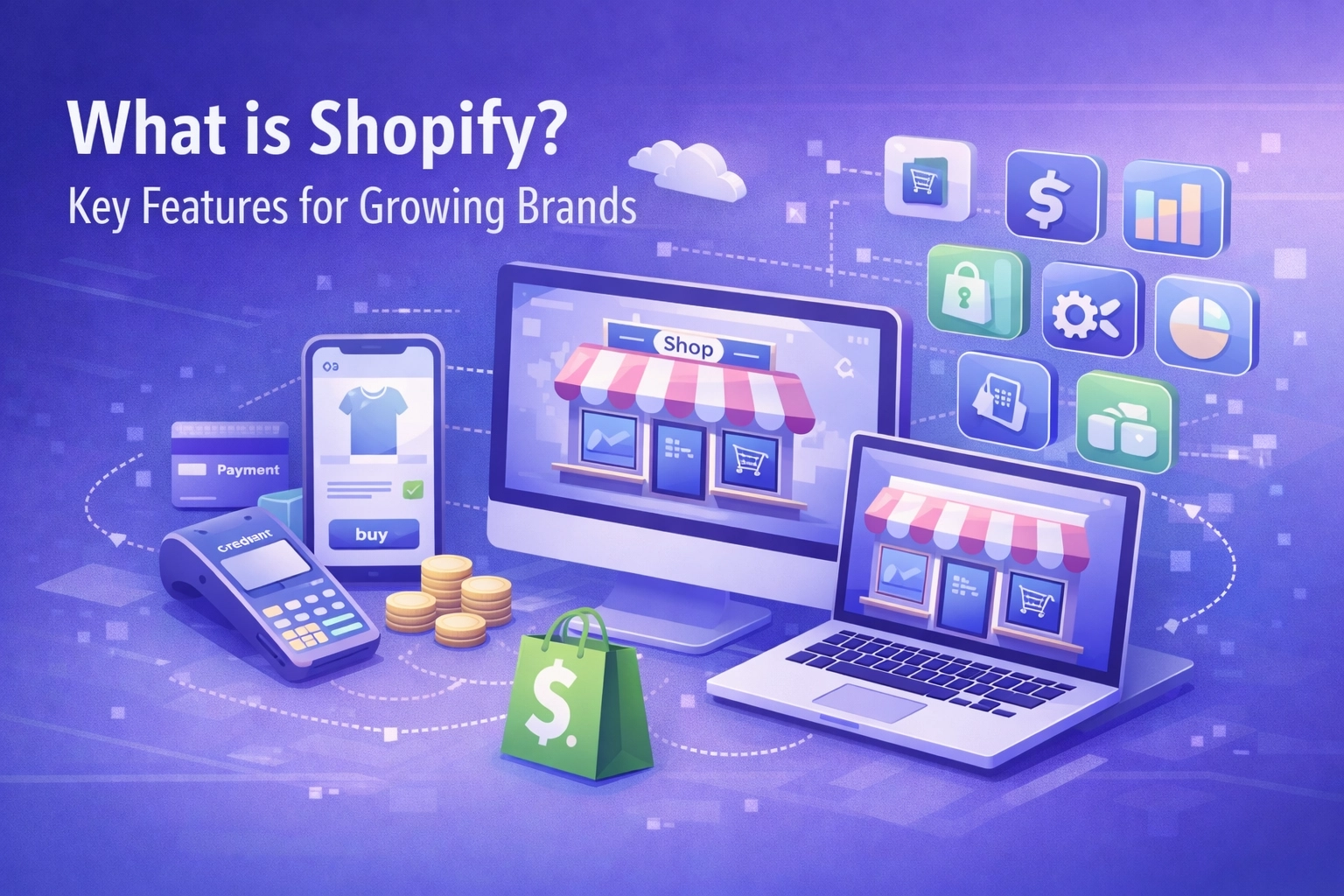
Shopify is a hosted e-commerce platform that lets you:
- Build and manage an online store—products, collections, content, and navigation
- Sell across channels—online store, social, marketplaces, and more (depending on your setup)
- Manage orders and customers—with a clean admin experience and deep extensibility
- Extend the platform—through apps, APIs, and custom development when your business logic demands it
In practice, Shopify becomes the front-end engine for your D2C revenue—your storefront, checkout, and conversion layer—while the rest of your ecosystem (marketing, fulfillment, finance, ERP) plugs in around it.
Key Features of Shopify
Below are the Shopify capabilities we see D2C brands rely on most—especially once you move beyond “launch a store” into “run a business.”
1. Ease of use (without limiting you later)
Shopify’s admin is built for day-to-day execution:
- Product and collection management that doesn’t require a developer
- Order workflows that support real operations—fulfillment, refunds, cancellations
- Clean catalog structures (variants, SKUs, inventory tracking) that scale with SKU growth
You get speed early—then you keep control as complexity increases.
2. Customizable themes and storefront flexibility
Shopify themes give you a strong baseline—then you can tailor:
- Brand-first UI using theme customization
- Conversion-driven templates for collection and product pages
- Custom sections and components when you need differentiated UX
We build and optimize Shopify storefronts with performance, UX, and maintainability as first-class requirements—because design only matters if it ships fast and converts.
3. Integrated payments with Shopify Payments
Shopify Payments reduces operational overhead by keeping payments native to the platform:
- A streamlined setup experience
- Centralised visibility into payouts and transactions
- Tight integration with Shopify’s checkout and order system
Payments are part of the architecture—not a bolt-on.
4. Robust app ecosystem (extensions, not hacks)
Shopify’s app ecosystem covers core commerce needs—then lets you extend further:
- Subscriptions, reviews, loyalty, bundles, upsells
- Shipping and fulfilment integrations
- Email/SMS marketing, analytics, attribution
The key is governance. We select, implement, and rationalise apps so your store stays stable—no redundant plugins, no overlapping features, no hidden performance debt.
5. Mobile commerce capabilities
Mobile isn’t a feature—it’s the default customer journey. Shopify supports mobile-first commerce through:
- Responsive themes and storefront rendering
- Fast product discovery and checkout flows
- Admin and operational workflows that don’t break when your team is moving
We treat mobile performance and conversion as baseline architecture—because most D2C revenue is earned on small screens.
How QKON Bytes helps you build and optimise on Shopify
Shopify is the foundation. Execution is the differentiator. We implement Shopify the way scaling brands need it:
- Store builds and rebuilds
- Theme implementation, UX architecture, conversion flow design
- Optimisation and growth support
- Performance tuning, CRO changes, merchandising structure, analytics sanity
- Advanced integrations
- When your ecosystem requires real-time data flows—stock, pricing, orders, fulfilment—we implement integrations that keep Shopify aligned with operations
If you’re considering Shopify—or you’re already on Shopify and want a store that performs like infrastructure—let’s talk.
1. You're Choosing an ERP Based on Features, Not Business Logic
Most merchants approach ERP selection like shopping for a car: they compare feature lists, read reviews, and pick whatever seems "best in class." Then they discover their chosen ERP treats inventory fundamentally differently than Shopify does, or can't handle their specific fulfillment workflow without expensive customization.
The actual problem: You're selecting technology before mapping your business processes.
What to do instead:
- Audit your current order-to-fulfillment workflow and identify every decision point, data transformation, and exception case
- Map how your business actually operates: preorders, backorders, bundle products, subscription boxes, wholesale channels
- Choose an ERP that matches your business logic, not one that forces you to rebuild your operations around its limitations
- Verify Shopify compatibility at the API level, not just marketing claims
We architect integrations after understanding how your business works, not before. That's why our ERP integration solutions start with process mapping: because forcing a square business into a round ERP creates permanent inefficiency.
2. Your Data Mapping Strategy Is Breaking Customer Experience
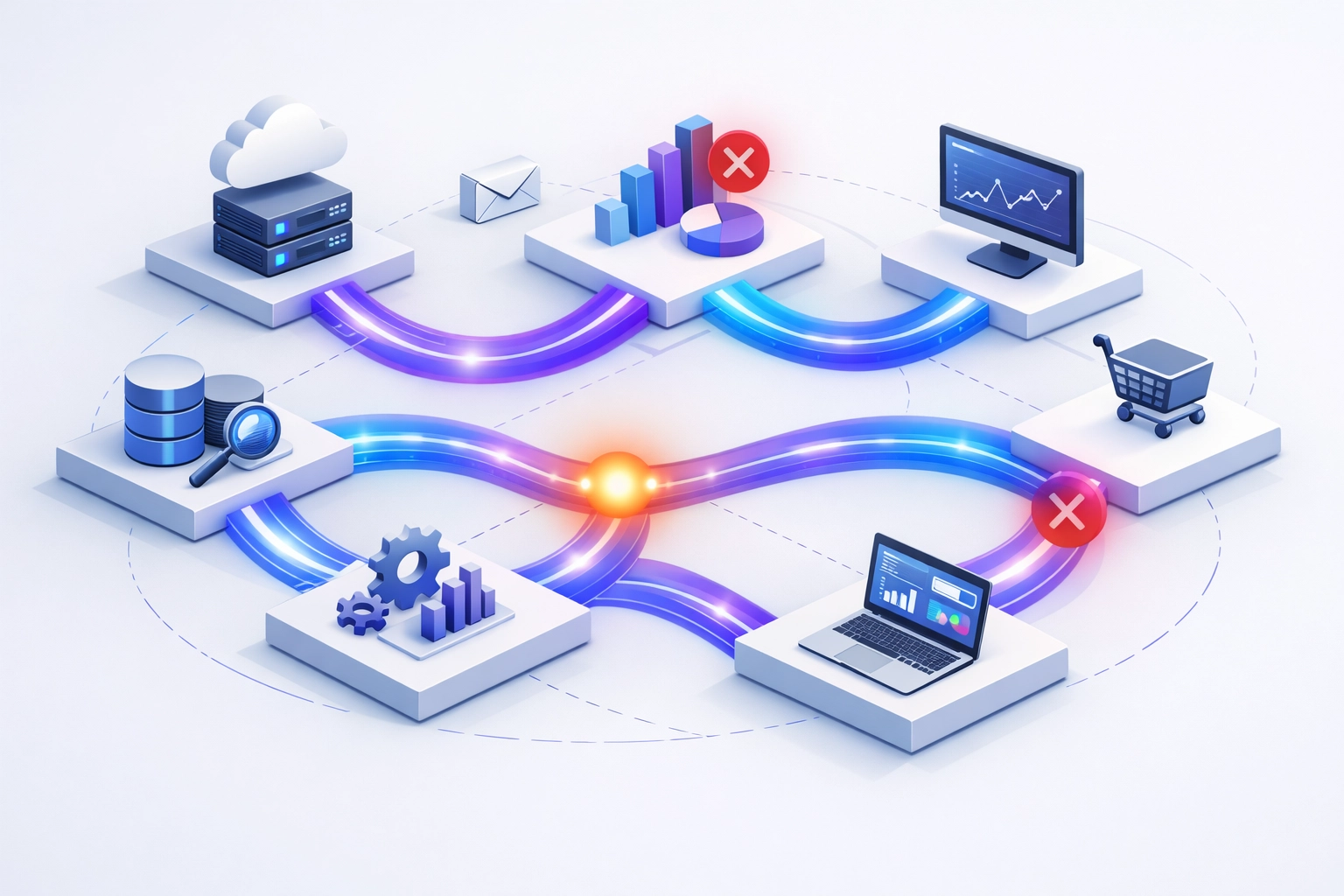
Here's where most integrations implode: Shopify stores customer data one way, your ERP stores it differently, and nobody establishes a single source of truth. One customer creates multiple records. Billing addresses don't sync. Order histories fragment across systems.
The cost: You're looking at duplicate customer records, failed order syncs, inventory discrepancies, and a customer service team that can't access accurate information.
How we engineer data mapping:
- Establish unique identifiers for every entity: customers, products, orders, locations
- Build bidirectional mapping rules that account for both systems' data models
- Create transformation layers that translate Shopify's discount structure into your ERP's pricing logic
- Run test migrations with real data to surface edge cases before they become production problems
- Document every mapping decision so your team understands why data flows the way it does
Our implementation approach treats data mapping as architecture, not configuration. We don’t just move data—we establish governance rules that maintain integrity across your entire ecosystem, then implement those rules using Stock2Shop as the integration engine.
3. You're Treating Integration Like a Plug-and-Play Solution
The integration provider's demo made it look simple: connect your Shopify store, map a few fields, flip a switch, and watch orders flow seamlessly into your ERP. Then reality hits: your product variants don't map correctly, your shipping rules require custom logic, and your tax calculations need conditional workflows.
What you're underestimating: Every business has operational complexity that generic integrations can't handle out of the box.
The engineering approach:
- Budget for customization from day one: assume your business logic requires tailored workflows
- Use middleware platforms that support conditional logic and custom transformations
- Allocate realistic timelines that account for testing, iteration, and edge case handling
- Build modular integration components that can evolve with your business without requiring complete rebuilds
We implement integration frameworks, not just connections. Our Shopify solutions use flexible middleware that adapts to your business rules through configuration, not hard-coded scripts that break when platforms update.
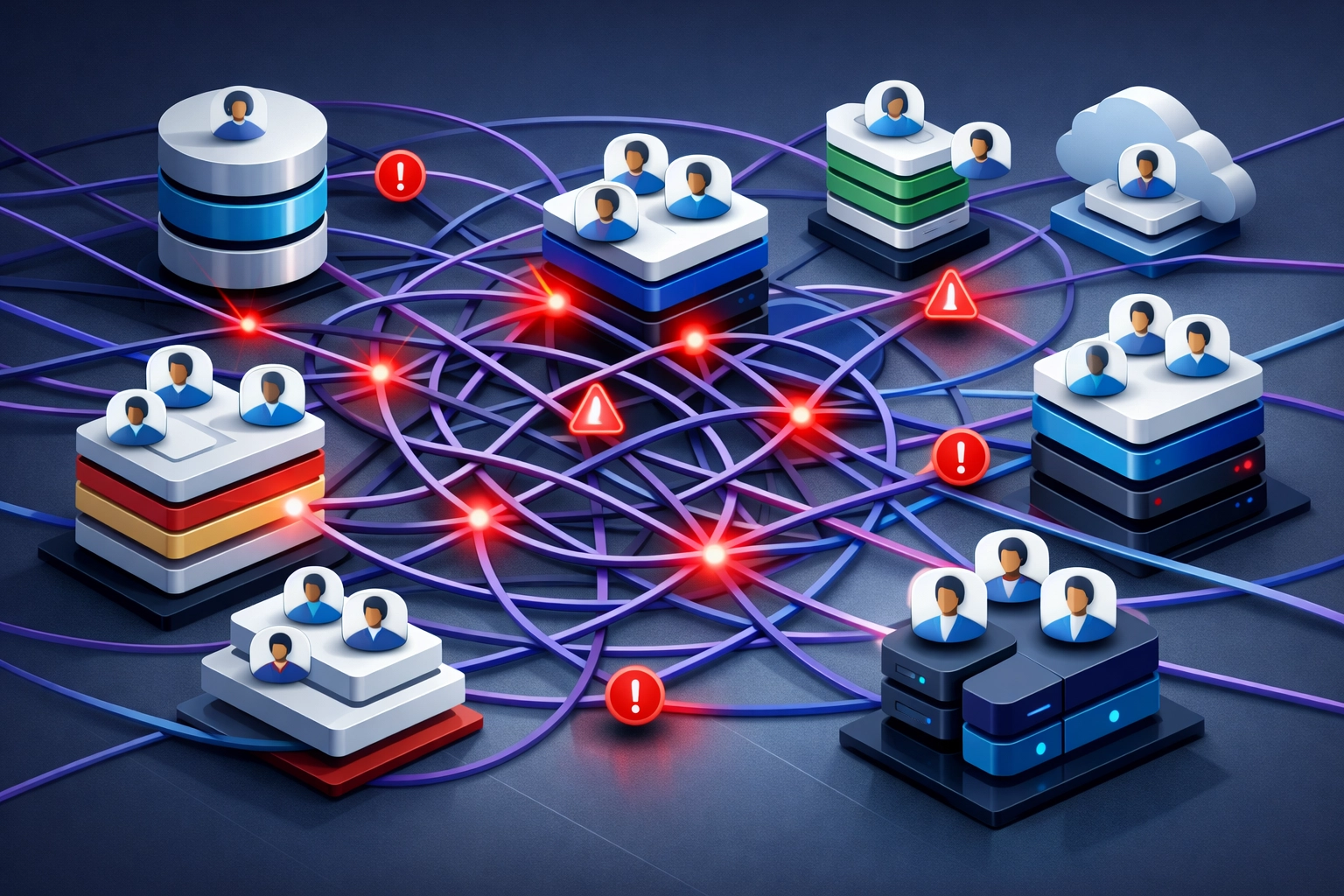
4. Your Team Doesn't Know How to Use the System You Just Installed
You spent months and significant budget implementing a sophisticated ERP integration. Then your warehouse staff continues using the old manual process because nobody trained them properly. Your customer service team can't navigate the new interface. Your accountant is still reconciling orders in spreadsheets.
The reality: Technology without adoption is just expensive shelfware.
How to drive actual usage:
- Conduct hands-on training sessions specific to each role: warehouse staff needs different knowledge than accounting
- Create process documentation that maps daily tasks to system workflows
- Establish feedback loops to identify friction points before they become workarounds
- Assign system champions within each department who become internal experts
We don't just build systems and walk away. Implementation includes training your team on the ecosystem we've engineered, because architecture is only valuable when people use it correctly.
5. Your Inventory Data Is Always Out of Sync
Orders are being placed for products you don't have in stock. Your Shopify store shows availability that doesn't match your warehouse reality. Customers are receiving "out of stock" notifications hours after placing orders.
What's happening: Your integration isn't syncing inventory in real-time, creating a lag that destroys customer experience during peak periods.
The solution architecture:
- Implement real-time or near real-time synchronization for inventory, orders, and fulfillment status
- Use webhooks and API triggers to push updates instantly when state changes occur
- Build monitoring systems that alert you when sync delays exceed acceptable thresholds
- Create fallback mechanisms for when integrations temporarily fail
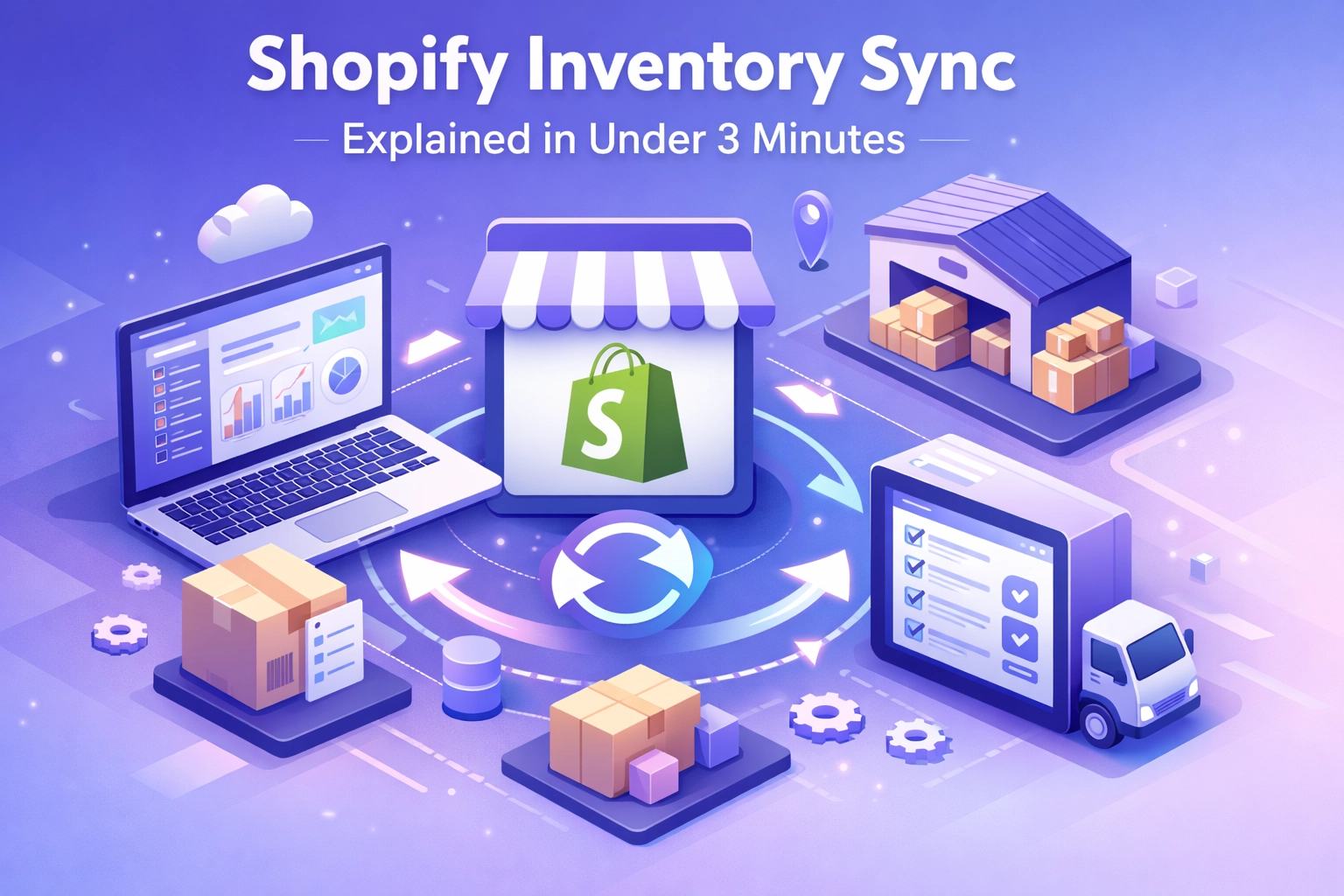
For D2C brands, shopify inventory sync is mission-critical infrastructure. We architect synchronization as a controlled pipeline—implemented on Stock2Shop’s technology—so stock and order events propagate fast, predictably, and with monitoring that surfaces issues before customers experience them.
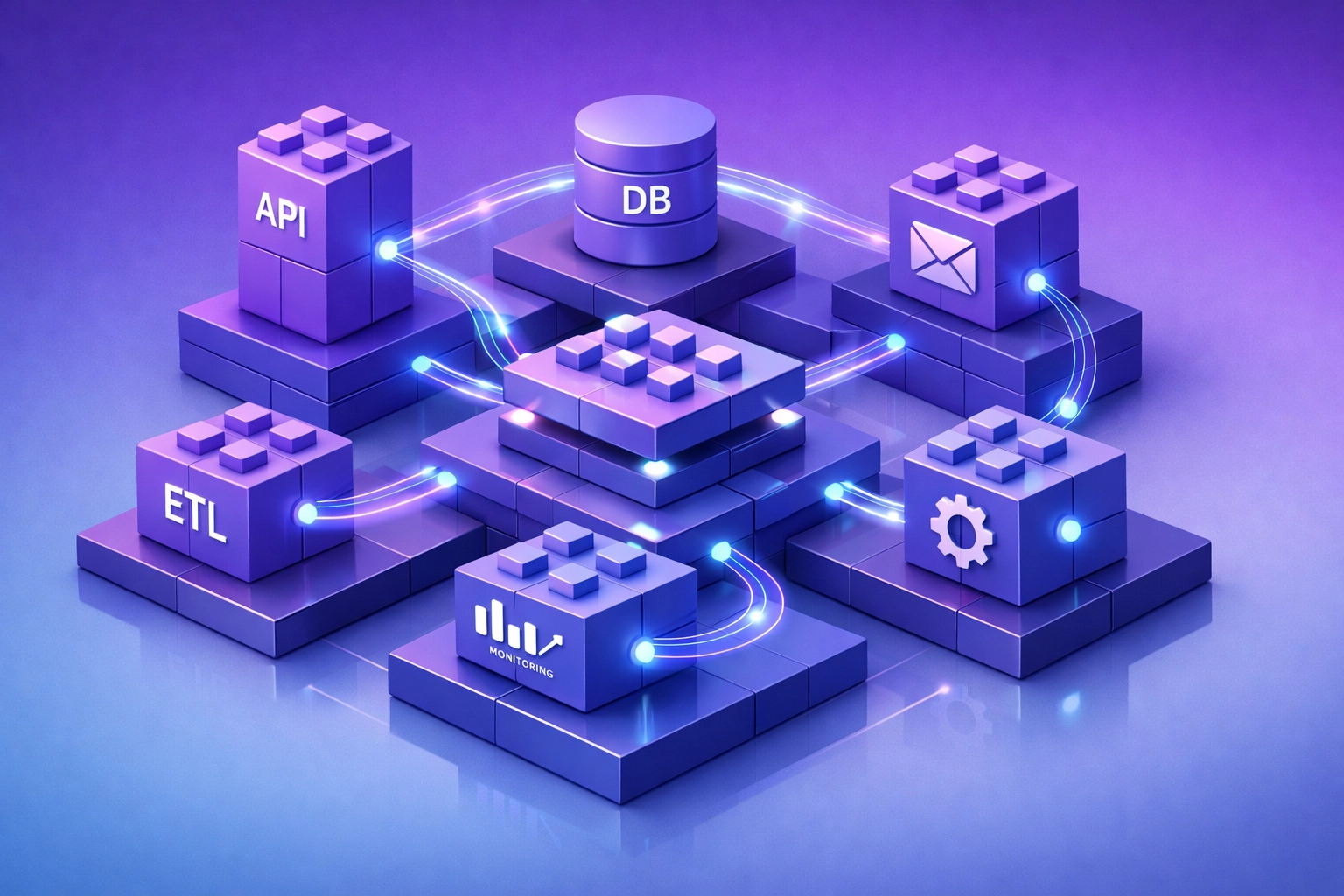
6. You're Not Maintaining the Integration You Built
You launched your ERP integration six months ago. It worked perfectly at first. Now orders occasionally fail to sync, inventory discrepancies are becoming common, and your team is spending hours each week manually reconciling data.
What changed: Shopify updated their API. Your ERP pushed a new version. Your product catalog evolved. Your integration didn't.
Ongoing maintenance requirements:
- Schedule quarterly system audits that verify integration health and data accuracy
- Monitor Shopify and ERP release notes for changes that affect your integration
- Keep all middleware, APIs, and custom scripts updated to current versions
- Partner with integration specialists who provide ongoing support, not just implementation
ERP integration isn't a project: it's infrastructure. Our business process automation approach treats integrations as living systems that require continuous monitoring, maintenance, and evolution as your business scales.
7. You're Forcing Old Workflows Into New Systems
This is the mistake that kills ROI: you implement a sophisticated ERP system, then force it to replicate your old manual processes instead of optimizing workflows to leverage what the technology enables.
The missed opportunity: You're paying for automation while still doing things manually.
How to align processes with capabilities:
- Reevaluate every workflow from first principles: what should this process accomplish, not how did we used to do it
- Identify manual touchpoints that automation can eliminate completely
- Build conditional workflows that handle exceptions automatically rather than requiring human intervention
- Get buy-in across departments by demonstrating how new processes reduce their workload
We architect integrations that transform operations, not digitize inefficiency. That means challenging existing workflows and rebuilding them around what your integrated ecosystem can accomplish.
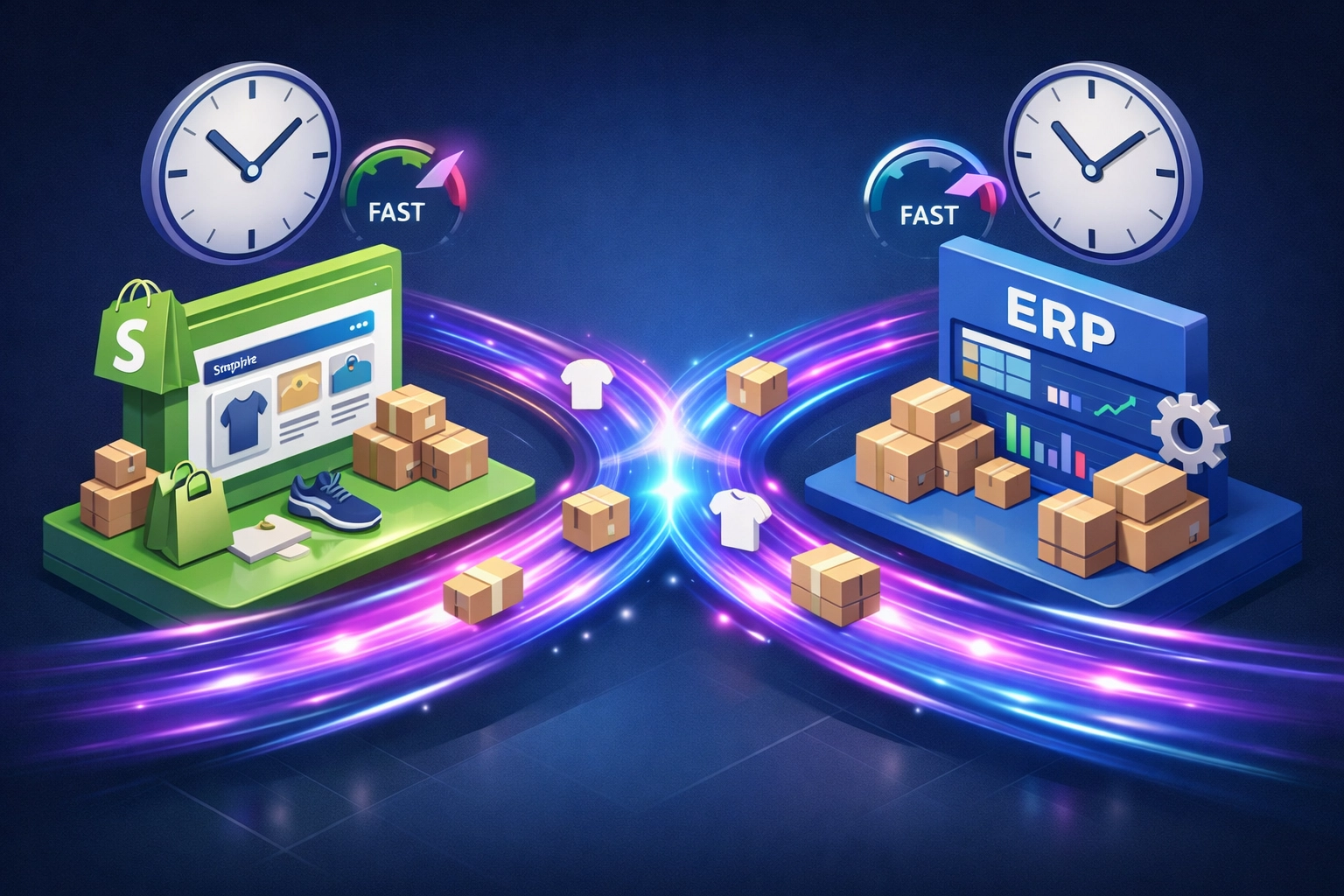
What Proper Integration Architecture Actually Looks Like
The pattern here is consistent: integration failures stem from treating this as a technical project when it’s actually a business transformation.
Connecting Shopify to an ERP isn’t about “moving data.” It’s about engineering an operational ecosystem where information flows cleanly, business logic executes consistently, and your team operates from a single source of truth—without reconciliation work becoming a permanent role.
Why Shopify ERP integration is necessary for D2C brands
When you’re running D2C at scale, your storefront is only as trustworthy as the data behind it. Proper shopify erp integration gives you:
- Real-time operational truth
- Inventory availability reflects ERP reality across locations
- Orders, fulfillments, and cancellations sync without delays
- Scale without admin overhead
- New products, variants, and bundles publish without manual duplication
- Promotions don’t create downstream cleanup in ERP pricing
- Customer trust that survives peak periods
- Reduced backorders and “we’ll refund you” scenarios
- Accurate dispatch expectations because stock and allocations are consistent
The major pitfalls we see (and why they hurt margin)
If you recognise any of these, your erp ecommerce integration is operating as a risk surface:
- Manual data entry becomes your integration
- Teams re-key products, prices, and orders between systems
- Errors become “normal,” reporting becomes unreliable, and returns increase
- Overselling during spikes
- Stock updates lag, allocations don’t sync, and Shopify sells what the warehouse can’t ship
- Support workload explodes—refunds, substitutions, and apology emails become routine
- Mismatched pricing and discount logic
- ERP price lists vs Shopify market pricing drift apart
- Discounts apply differently across platforms, creating reconciliation issues and customer disputes
How we implement and support with Stock2Shop
We use Stock2Shop as the integration engine and we handle the architecture, implementation, and ongoing support around it—so the integration behaves like infrastructure, not a fragile connector.
What we implement and maintain:
- System architecture and mapping
- Products, variants, barcodes/SKUs, images, collections (where applicable)
- Customers, orders, fulfillments, refunds, and status mappings
- Operational sync design
- Inventory updates tuned to your fulfilment model (single warehouse vs multi-location)
- Pricing sync aligned to ERP rules (price lists, promotions, channel-specific pricing)
- Monitoring and support
- Health checks, exception handling, and ongoing platform change management
- Continuous tuning as catalog, channels, and workflows evolve
Every D2C brand reaches the point where manual processes break down. The businesses that scale treat shopify inventory sync and shopify erp integration as strategic infrastructure—implemented properly, supported continuously, and aligned to how operations actually run.
Ready to architect your Shopify ERP integration properly? Let’s talk about your ecosystem.
Tagged with :