Most businesses think they need a website.
They don't: they need an ecosystem.
We don't build websites. We architect unified commerce engines: digital infrastructures where every system, workflow, and touchpoint operates as a single, synchronized organism. We engineer the connective tissue between your ERP, your storefront, your inventory systems, your accounting platform, and your customer data. We build the infrastructure that turns operational friction into automated flow.
This isn't about templates or themes. It's about hand-in-hand collaboration to design workflows specific to your operational reality: because retail digital transformation isn't a product you buy, it's an architecture you build.

The Architectural Philosophy
We work with one principle: your business logic should dictate your technology stack, not the other way around.
That means we don't start with platform limitations: we start with your constraints. Your product catalog structure. Your pricing tiers. Your fulfillment workflows. Your supplier relationships. Your in-store operations. Your team's existing muscle memory.
Then we reverse-engineer the digital ecosystem that supports exactly that: no more, no less.
Every client engagement follows the same methodology:
- Discovery architecture: we map your current state, identify bottlenecks, and document every operational handoff where data gets trapped or duplicated
- Solution design: we spec the unified engine: what systems connect, what data flows where, what automations eliminate manual touchpoints
- Custom build: we implement Shopify integration services, ERP synchronization, workflow automation, and workflow engines tailored to your operational DNA
- Validation and scale: we stress-test, refine, and hand over an engine that runs without you babysitting it
This isn't consulting theater. It's engineering.
The Service Layers
1. Retail Solutions: D2C and In-Store to Digital
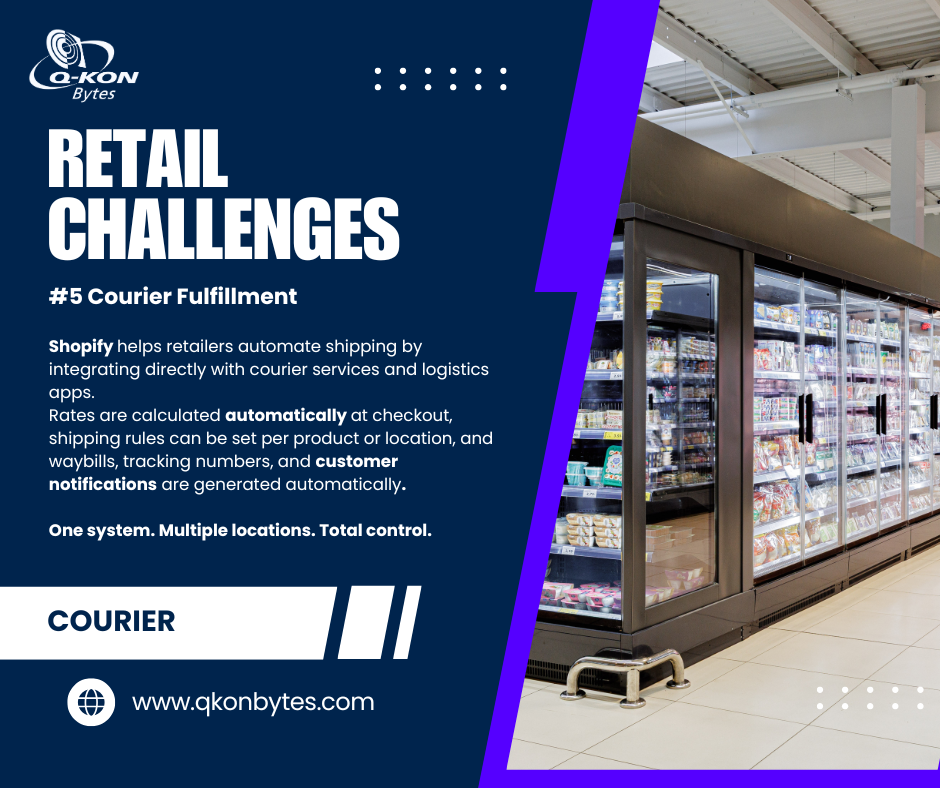
Retailers face a specific problem: their physical operations and digital presence operate on parallel tracks, never truly synchronized.
We architect retail digital transformation that unifies the two:
- Direct-to-consumer storefronts that reflect real-time inventory from your ERP: no overselling, no manual stock updates, no customer disappointment
- In-store integration where your physical locations become fulfillment nodes for online orders: click-and-collect, ship-from-store, unified inventory pools
- Customer profiles that follow shoppers across channels: online browsing history informs in-store service, in-store purchases update online recommendations
What existed: separate systems requiring daily reconciliation, inventory guesswork, and customers who can't see if you actually have the product in stock.
What we build: a unified retail engine where online visibility drives foot traffic and in-store operations fulfill digital orders seamlessly.
What this enables: higher basket values, reduced stockouts, and customers who trust your availability because they can see it before they drive to your store.
2. B2B Digital Solutions: Suppliers, Manufacturers, Wholesalers
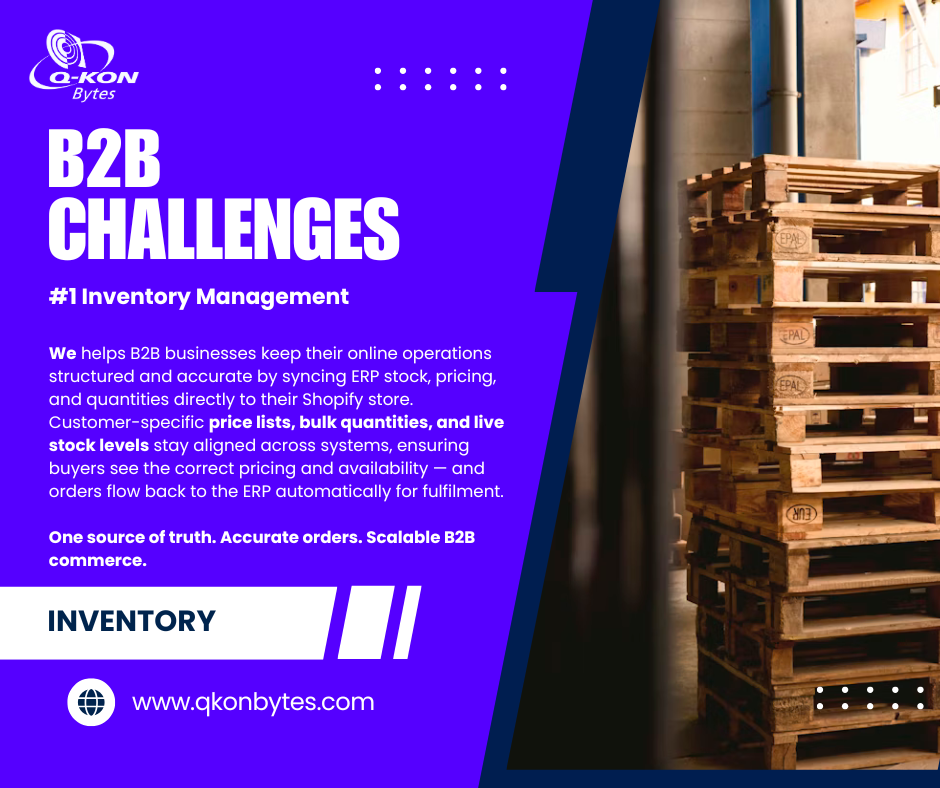
B2B commerce operates under different physics: pricing tiers, bulk ordering, account-specific catalogs, trade credit terms, and relationships that span decades.
We build Shopify B2B ecommerce platforms designed for complexity:
- Dealer-specific login portals with custom pricing, catalogs, and order history per account
- Tiered pricing engines that apply volume discounts, contract rates, and negotiated terms automatically
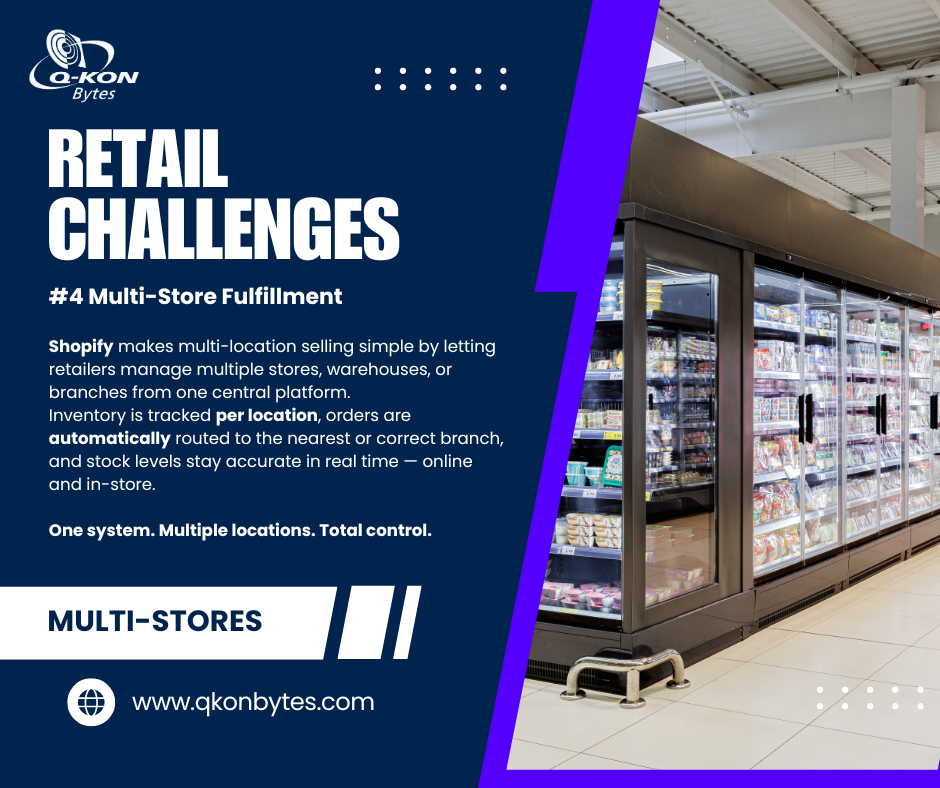
- Multi-location warehousing where orders route to the nearest distribution center or branch with available stock
- Trade account management with credit limits, payment terms, and approval workflows integrated into your ERP
What existed: phone orders, email catalogs, Excel sheets flying back and forth, and sales reps manually entering orders into your system.
What we build: self-service portals where dealers place orders directly, see their real-time account status, and access their negotiated pricing: all synced with your ERP in real time.
What this enables: reduced order errors, freed sales capacity, 24/7 ordering availability, and operational leverage that doesn't require hiring more people to handle more volume.

3. Shopify Expertise: Custom Solutions and Shopify Plus
Shopify is our foundation: but we don't use it like everyone else.
We're Shopify experts who build custom solutions that extend far beyond the platform's out-of-box capabilities:
- Custom checkout flows for complex products, subscription models, or multi-step configurations
- Shopify Plus implementations for enterprises requiring advanced automation, multi-storefront management, and API-driven integrations
- Headless commerce architectures where Shopify powers the backend while custom frontends deliver brand-specific experiences
- App ecosystem optimization: we integrate, configure, and sometimes build custom apps when off-the-shelf won't cut it
We architect Shopify as the commerce layer within a broader operational stack: not as a standalone platform.
4. Digital Marketing: Paid Acquisition That Converts
Commerce infrastructure means nothing if no one finds it.
We engineer digital marketing systems: not campaigns:
- Google Ads with product feed optimization, dynamic remarketing, and performance-focused account structures
- Meta advertising (Facebook, Instagram) with catalog integration and conversion-optimized creative testing
- LinkedIn campaigns for B2B lead generation targeting decision-makers by industry, company size, and role
But here's the difference: we don't just drive traffic. We engineer the entire conversion path from ad click through checkout, optimizing every friction point in the funnel.
What existed: agencies that generate traffic but don't understand why it doesn't convert.
What we build: acquisition systems where paid traffic converts because the underlying commerce infrastructure removes every reason to hesitate.
5. ERP Integration: The "Bytes Glue"
This is the connective tissue: the real-time synchronization engine that makes unified commerce possible.
We specialize in ERP integrations that eliminate data silos:
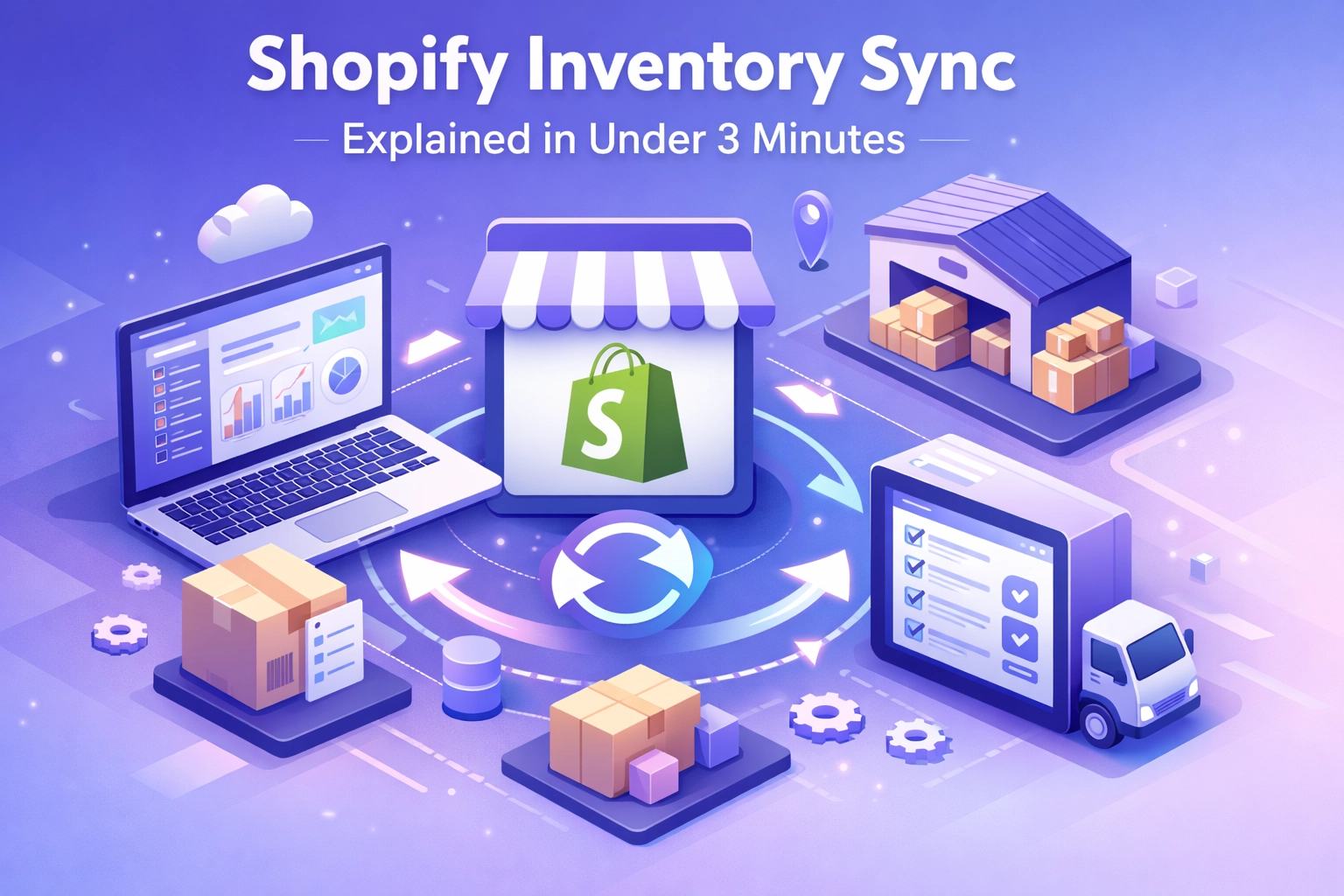
- Real-time inventory sync: stock levels, product data, and pricing flow from your ERP to Shopify continuously, no batch uploads, no overnight delays
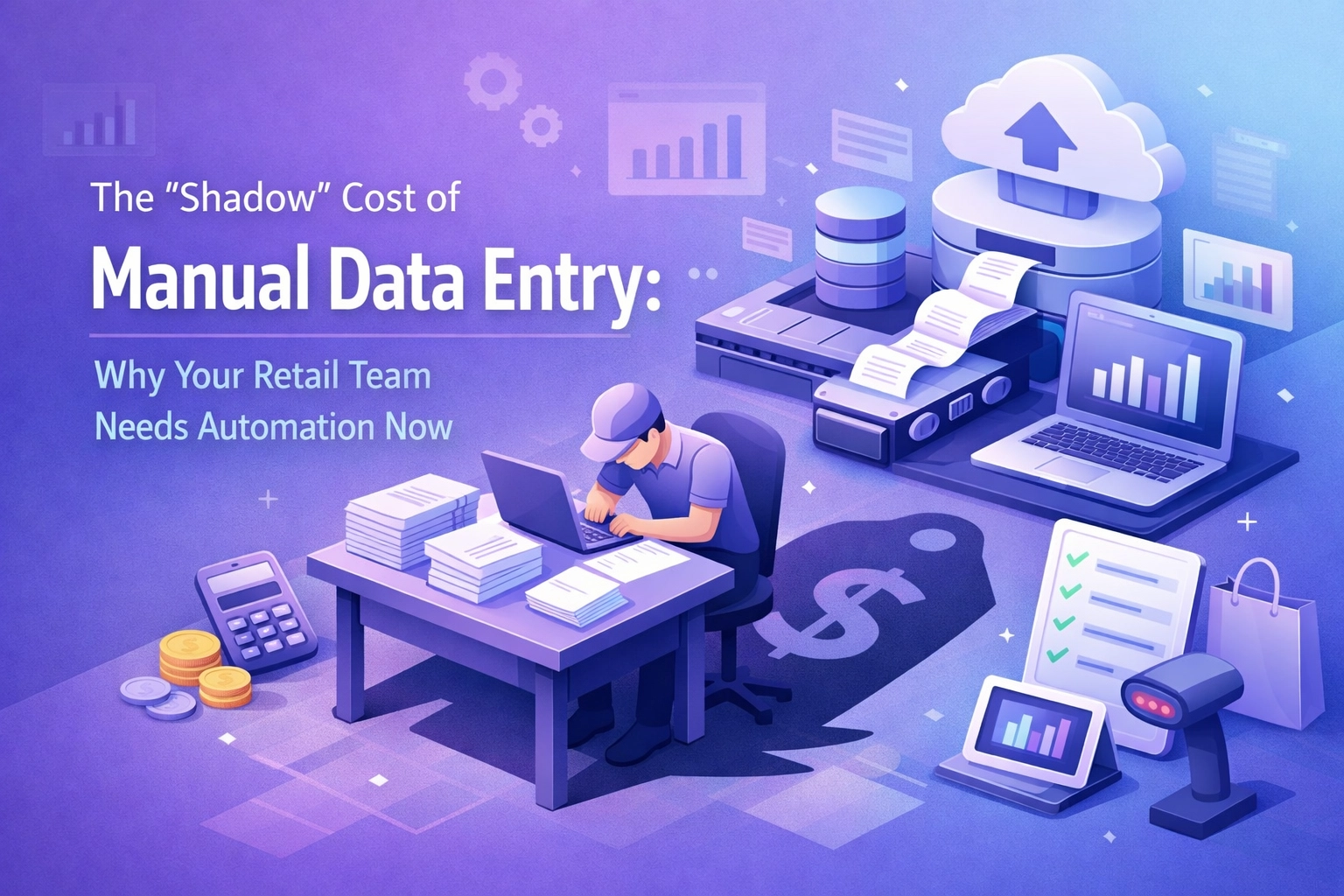
- Automated order flow: online orders push directly into your ERP for fulfillment, invoicing, and accounting without manual data entry
- Pricing and catalog control: manage everything in your ERP where your team already works; changes propagate automatically to all customer-facing channels
- Financial reconciliation: sales, payments, and returns sync back to your accounting system with audit trails intact
This is what we call shopify erp integration done right: not a loose coupling with periodic syncs, but a tight integration where both systems operate as one.
What existed: dual data entry, daily reconciliation rituals, stockouts because the website didn't know the warehouse was empty, and pricing errors that cost you margin.
What we build: single-source-of-truth architecture where your ERP remains the operational hub and your digital storefront becomes a real-time window into it.
What this enables: operational accuracy, eliminated manual touchpoints, and the ability to scale order volume without scaling headcount proportionally.
6. ZOHO Services: Operational Backbone
Beyond commerce, businesses need operational infrastructure: HR, accounting, workflow management, CRM.
We implement and integrate ZOHO suite applications:
- Zoho Books for accounting with automated invoicing, expense tracking, and financial reporting
- Zoho People for HR management: leave tracking, attendance, performance reviews
- Zoho CRM integrated with your commerce platform so customer interactions inform sales strategies
- Zoho Creator for custom workflow applications when no off-the-shelf solution fits your process
We build these as part of the unified ecosystem: not isolated tools, but integrated components that feed data into your decision-making infrastructure.
7. Workflow Automation: Eliminating Manual Touchpoints
Every manual handoff in your operation is a bottleneck waiting to constrain your growth.
We engineer workflow automation that eliminates them:
- Order-to-fulfillment automation: from checkout through invoicing, shipping label generation, tracking updates, and customer notifications
- Inventory management workflows: automatic reorder triggers, low-stock alerts, multi-location stock balancing
- Customer communication sequences: abandoned cart recovery, post-purchase follow-ups, review requests
- Reporting and analytics automation: scheduled dashboards, anomaly alerts, performance monitoring
What existed: teams spending hours daily on repetitive tasks that machines should handle.
What we build: automated workflows that run in the background, freeing your team to focus on strategic decisions instead of data shuffling.
What this enables: scalable operations where doubling your order volume doesn't require doubling your team.
What This Represents
This service ecosystem isn't a menu: it's a methodology.
We don't sell isolated solutions. We architect integrated systems where every component reinforces the others: where your ERP integration makes your B2B portal possible, where your process automation leverages your digital marketing data, where your Shopify platform becomes the visible surface of a much deeper operational engine.
Most businesses outgrow their initial digital presence because it was never designed to scale. They hit a ceiling where adding more volume means hiring more people to handle the manual work the systems can't.
We build the opposite: unified commerce engines where operational capacity scales exponentially while headcount scales linearly.
That's not a service offering. That's a fundamental shift in how retail and B2B businesses operate in 2026.
If your digital presence feels like a separate project instead of your operational core: if you're still reconciling systems manually, if your team spends hours on tasks that should take minutes, if your growth is constrained by operational friction instead of market demand: you don't need another vendor.
You need an architect.
Learn more about our approach or start a conversation about your operational reality.
Tagged with :